Interview Tips
An interview is not an exam — it is a professional conversation. Your goal is to show that you can think clearly, communicate well, and fit the role.
Before the interview
Understand the job description and match your skills to it
Prepare 5–6 real examples from your experience
Practice speaking answers aloud (not silently)
During the interview
Listen carefully before answering
Take 2–3 seconds to think — this shows maturity
Answer in a structured way, not in long stories
After the interview
Thank the interviewer politely
Reflect on what went well and what didn’t
Small improvements in preparation can create a big difference in confidence.
Common HR Questions & Answers
HR questions are asked to understand your attitude, clarity, and self-awareness, not to trap you.
Common questions include:
Tell me about yourself
What are your strengths and weaknesses?
Why should we hire you?
Why do you want to join our company?
Where do you see yourself in 5 years?
How to answer effectively
Keep answers honest and professional
Avoid memorized or dramatic responses
Link your answers to the job role
Example:
“My strength is my ability to learn quickly and adapt to new situations. I focus on continuous improvement.”
Good HR answers are clear, calm, and relevant — not perfect.

STAR Method
A Simple Way to Answer Tough Questions
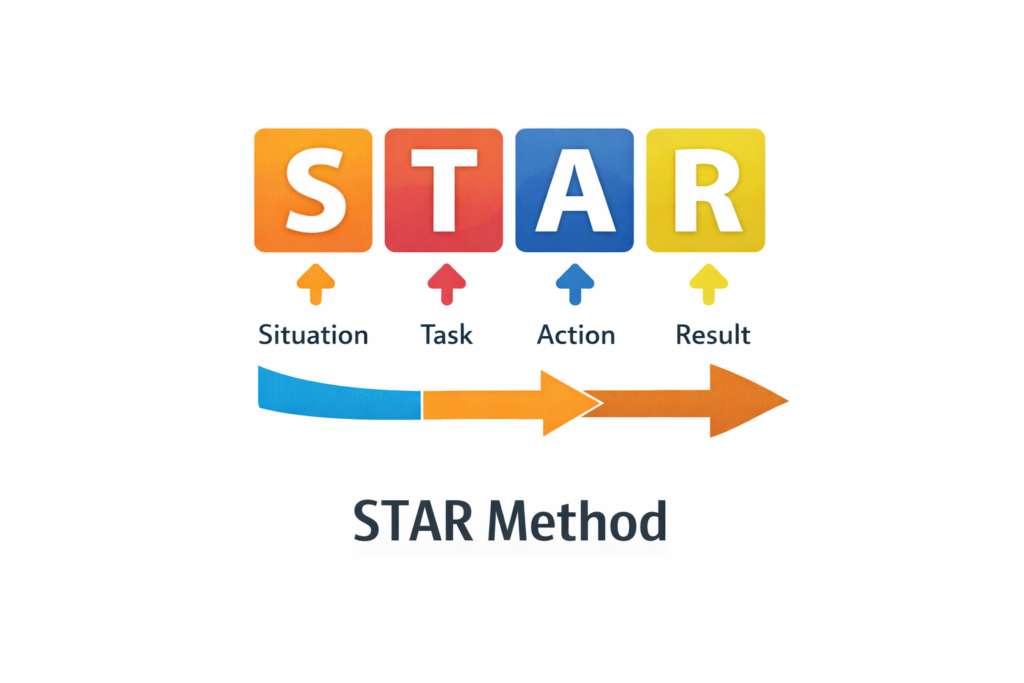
Many interview questions ask about past experience. The STAR method helps you answer them clearly.
STAR stands for:
- S – Situation: What was the context?
- T – Task: What was your responsibility?
A – Action: What did you do?
R – Result: What was the outcome?
Why STAR works
Keeps answers structured
Prevents rambling
Makes your experience easy to understand
- Example:
“In my previous role (Situation), I was responsible for meeting a tight deadline (Task). I reorganized priorities and coordinated with the team (Action), which helped us deliver the project on time (Result).”
- Interviewers prefer clear stories over long explanations
Body Language Tips
Body Language Tips That Create a Strong Impression
What you do matters as much as what you say.
Positive body language
Sit straight and relaxed
Maintain natural eye contact
Nod slightly when listening
Keep hands visible and calm
Avoid
Slouching or leaning back too much
Looking down or away repeatedly
Fidgeting with hands or pen
Your body language should show:
Confidence
Interest
Professionalism
Remember, calm body language makes your spoken answers stronger.
Salary Negotiation Tips
How to Discuss Salary Without Fear or Awkwardness
Salary discussion is normal — and expected.
Before negotiation
Research market salary for your role
Know your minimum acceptable amount
Prepare reasons for your expectation
During discussion
Stay calm and respectful
Focus on skills and value, not personal needs
Avoid giving a number too early if possible
Example:
“Based on my experience and industry standards, I believe a fair range would be…”
Key rule:
Salary negotiation is not about demanding — it is about professional discussion.
Confidence and clarity matter more than aggressive bargaining.